Editorial guide
Ferry or flight from Athens to Crete?
Short answer: Crete is a flight day or an overnight-ferry day, not two versions of the same trip. Choose the ferry if you are taking a vehicle, making Crete one hub of an island chain, or want the crossing as part of the holiday (and will book a cabin). Choose the flight (about 50–55 minutes airborne, plus airport time) if you are visiting one base, are short on time, and do not need a car. A common compromise: fly in, ferry home (or the reverse), which gives you the ship experience without committing both directions to it.
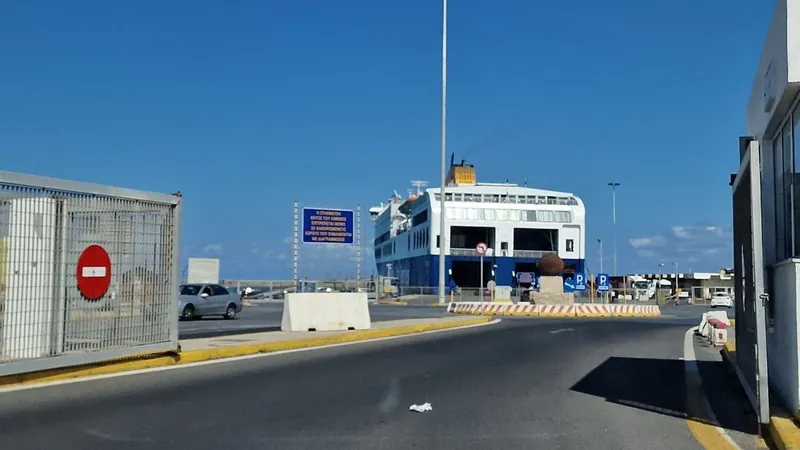
Crete is Greece's largest island, with three ports (Heraklion, Chania at Souda, and Sitia), so where in Crete matters more than how you got there. Match port to base first, then choose mode.
Schedules, crossing times, fares, vessel types and airport capacity are seasonal. All figures are indicative.
The timeline: how each leg actually eats a day
Ferry Piraeus to Crete - Heraklion (HER): about 7 h 50 min to 12 h depending on vessel and stops; most sailings are overnight (departing around 21:00–23:00 and arriving around 06:00–07:00). Daytime high-speed options also exist. - Chania (Souda, CHQ): about 8 to 9 h 30 min, usually overnight. - Sitia (and the Dodecanese approach through Karpathos/Kassos): longer, roughly 12 to 17 hours as part of regional schedules. - Cabin vs seat is the whole difference between transport and misery on a long ferry. Booking last minute can leave you on a reclining seat for nine hours.
Flight ATH to Crete - ~50 to 55 minutes airborne to Heraklion or Chania, with daily summer banks. - Add airport arrival time of about 2.5 hours (border checks can add queues), plus 35 to 45 minutes transfer to the centre or to the hotel zone; bag pickup and then the taxi to your base adds up again.
Realistic door-to-door (Athens to bed) - Flight: about 3.5 to 4.5 hours if sleeping near the airport/ATH; 5 to 6 hours if you need the final leg across town. - Overnight ferry: the crossing is pleasant, but you arrive around 06:00, and many hotels do not let you check in until mid-afternoon, so plan for the gap.
The difference matters most on short trips and much less on a 7-to-10-night stay.
Counting the cost (indicative ranges, per person, one way unless stated)
| Mode | Starting band |
|---|---|
| Domestic flight ATH–HER or ATH–CHQ | Typically from about €50 basic; promotional fares can be €32–50, and flexible/peak dates €80–150 |
| Blue Star / ANEK / Minoan conventional economy (seat) | Roughly €28–45 for deck/economy; €35–60 with a numbered seat |
| Cabin (shared two-berth) on Piraeus, Crete | Roughly €70–110 per person in most cabins; cabins start around €60 |
| Car (4 m) on a Crete ferry | Roughly €80–170, depending on operator and season |
| Bag check / seat selection / transfers | Extra on flights; ferry allowances are generous |
Hidden costs that move the comparison: - Flying is hard on mountain-bike bags, diving gear, large suitcases, camera cases and for a party of four with kids. Ferries are generally more forgiving with luggage; check the allowance on your ticket. - Taking the car on the ferry raises the price; on arrival, switching to rental cars is usually cost- and stress-neutral for a one-island stay. - A cabin rather than a seat can make the ferry dearer than a flight in many cases, which is why flights win more often for two people with little luggage. - Vehicle passengers pay a separate deck-space rate; this can exceed the passenger fare in August, but it is still usually cheaper than renting a car on Crete for a long stay.
Comfort and experience
- Ferry: open decks, cafés and dining areas, space to walk around, a contained environment for children, dedicated pet areas on some ships, and an overnight crossing that replaces a hotel night. You can sleep in a bed rather than an airline seat.
- Flight: 50–55 minutes is short, but airport processing and EES queues can add hours, and the cabin is cramped.
The experience gap is real: arrivals in Crete (Heraklion harbour breakwater at dawn, Souda Bay approach from the north) are genuinely beautiful, and on a stable, full vessel they are a pleasant overnight. On a busy mechanical vessel, some people are miserable regardless of exterior view.
Reliability and seasonality
- Heraklion and Chania are year-round ports with strong sailings; Sitia is less frequent and the Dodecanese leg drops toward winter. High summer has daily Piraeus to Heraklion crossings; off-season thins on Chania and Sitia and can drop sharply on some routes.
- Airlines run more daily flights in summer and cut back out of season.
- Strikes and weather can stop sailings on particular days. Ferries and flights are separate contracts, so a ferry disruption does not automatically protect your flight or vice versa.
When to choose which
| Situation | Choice |
|---|---|
| One-base week+ city or village holiday, no vehicle | Flight out, flight back |
| You want a cabin and a rested arrival | Overnight ferry outbound, fly home |
| Taking the car back to the mainland mid-trip | Ferry either direction |
| Tight 3-to-4-night city break | Flight both ways |
| Multi-island Cyclades plus Crete | Ferry is usually the practical choice |
| Sea-sickness prone | Flight, or a conventional ferry with a cabin |
| Families with babies | Ferry for space; book a cabin and check meal/crib arrangements |
Mistakes travellers make (that cost money or comfort)
- Comparing a flight's 50 airborne minutes with a ferry's overnight time while ignoring airport processing and the value of the cabin.
- Booking the cheapest seat on an overnight ferry and concluding the ship is uncomfortable. The cabin class is the difference.
- Arriving in Heraklion at 06:00 when hotel check-in starts at 15:00, with no plan for the gap.
- Landing at Chania/Souda late at night and discovering the rental desk is closed; confirm opening hours.
- Mismatching the port to your base: Heraklion, Chania and Sitia are hours apart by road.
FAQ
How long is the ferry from Piraeus to Heraklion?
About 7 h 50 min to 12 hours (Blue Star, ANEK and Minoan operate most; crossing times vary by vessel and stops). Departures are mostly overnight in the 21:00–23:00 range.
How long is the ferry from Piraeus to Chania (Souda)?
About 8 to 9 h 30 min, generally an overnight service into Souda near Chania. It arrives in the early morning.
How long is the flight from Athens to Crete?
About 50 to 55 minutes airborne to Heraklion (HER) or Chania (CHQ). Add airport arrival 2.5 hours plus transfer.
Are there ferries from Crete to other Aegean islands?
Yes, but not always directly: Blue Star and ANEK serve some Crete–Cyclades links, and other operators run seasonal connections. Service varies by date; treat each leg as a separate booking question.
Is an overnight ferry to Crete worth it?
Yes if you have a cabin and treat it as transport-plus-accommodation. No if you are a light sleeper taking the bare seat class; in that case fly.
Should I fly one way and ferry back?
Often the best compromise. Ferry the leg where an overnight crossing suits you, and fly the other way if time is short.
Last checked
Services are seasonal and change; re-check night sailings, vessel names and port logistics before travel. This is planning guidance, not an operational guarantee.
Disclosure
This article contains practical recommendations and links that may qualify as affiliate links. If you book through an affiliate link, the site may earn a small commission at no extra cost to you. Affiliate links are not placed inside safety-critical steps.
Further planning
- Guide: Piraeus vs Rafina vs Lavrio
- Guide: Athens airport to Piraeus
- Guide: Fast ferry vs conventional
- Guide: Ferry or flight to Santorini
- Guide: Overnight ferry from Piraeus worth it
- Guide: Ferry cancelled due to wind
- Guide: Piraeus ferry and flight same day