Editorial guide
How to take a car on a ferry from Piraeus
Short answer: Book vehicle space separately and early: it sells out before passenger seats on summer routes to the Cyclades and Crete. Arrive at least 60–90 minutes before departure (more in August or with a large vehicle), declare the vehicle's full dimensions including roof boxes and racks, and check the operator's current EV/LPG rules before you pay. If the car is a rental, get written permission to take it off the mainland before you book the ferry. Not every vessel takes cars: many high-speed catamarans are passenger-only.
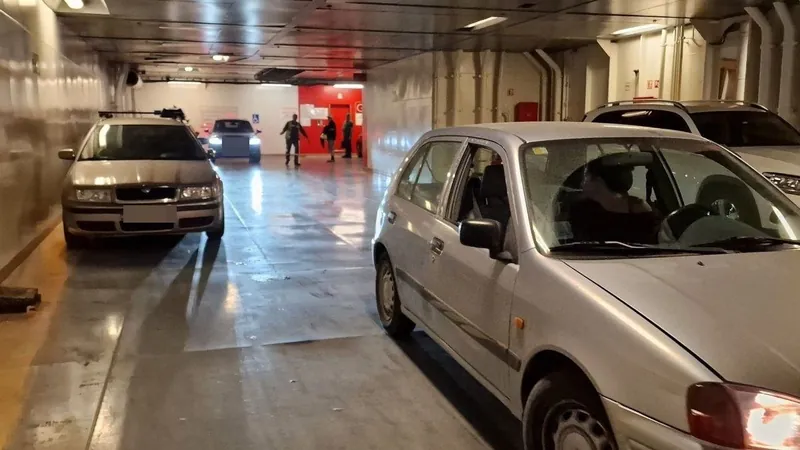
Vehicle space is the part of ferry booking where late decisions cost the most. A passenger can often squeeze onto a later sailing; a car usually cannot.
Vehicle rules, dimensions, alternative-fuel limits and operator policies change. Confirm with your exact operator and sailing before travel.
Book early, and book the car separately
- Vehicle space is a separate reservation attached to your passenger booking. A passenger ticket does not include a car.
- Summer routes sell out weeks or months ahead. For July–August, book car space well ahead on popular routes; for Crete and the Cyclades at peak, earlier is safer.
- Check both are issued on the same booking: passenger names, vehicle registration/plate, dimensions and sailing.
- Changing the sailing usually means rebooking the vehicle, not just moving a passenger seat. Treat vehicle bookings as less flexible than foot-passenger tickets.
- Motorhomes, campervans, trailers and roof tents may fall into a different class or be refused on some vessels. Declare them at booking, not at the ramp.
What to declare
- Length, width and height including roof boxes, bike racks, roof tents and trailers. Operators price and allocate deck space by dimensions; under-declaring can mean a surcharge or refusal.
- Plate number and vehicle type. Keep these consistent with the rental agreement or registration document.
- Alternative fuel: electric, plug-in hybrid, LPG or CNG. These have specific stowage and charge rules.
- Passengers travelling with the vehicle. Some operators require the driver to be named; all passengers still need tickets.
Rental cars: many Greek rental companies prohibit island crossings or require written authorisation and extra cover. Ask before booking the ferry, and keep the permission with the booking. Turning up at the ramp without it can void the rental insurance.
Electric, hybrid and LPG vehicles
Rules for alternative-fuel vehicles on Greek ferries vary by operator and vessel. As a planning baseline:
- Declare the vehicle type at booking. Do not arrive with an undeclared EV or LPG car.
- Electric and plug-in hybrid vehicles are commonly required to board with a battery state of charge below an operator-set limit, and charging on board is normally not permitted. Treat the exact limit as operator-specific and confirm it before travel.
- LPG/CNG vehicles often have their own rules on tank level and stowage. Confirm the rule for your sailing.
- Do not charge an EV or e-bike from a cabin or vehicle-deck socket. Crew instructions govern; unauthorised charging is a refusal risk.
- Keep the charging cable and emergency kit accessible but stored safely; do not leave loose lithium batteries in the car.
If these limits make your journey impractical, consider renting an electric car on the island instead of shipping your own.
Arrival and loading
- Vehicle boarding starts before foot-passenger boarding. Be at the vehicle waiting area 60–90 minutes before departure; allow 90–120 minutes in peak season, for a large vehicle, or if you do not know the port.
- Follow the operator's gate instructions, not a general port map. Piraeus vehicle entrances differ by route and operator; getting to the wrong end of a large port with a car is far worse than on foot.
- Driver and passengers usually separate at the ramp. Passengers board through the terminal; the driver loads the car and joins them on board. Agree a meeting point before you split.
- Take everything you need out of the car before loading: water, snacks, medication, layers, pet supplies, baby gear. The car deck is closed during the crossing.
- Switch off alarms, close windows, engage the handbrake and leave the car in gear or park as instructed. Do not leave valuables visible.
- Fuel: arrive with a sensible fuel level; do not refuel on board. Follow crew instructions on keys and access.
Which vessels take cars
| Vessel type | Cars? | Notes |
|---|---|---|
| Conventional ferry (Blue Star, ANEK, Minoan) | Yes | Best choice for cars, motorhomes and trailers |
| High-speed catamaran (many Seajets and similar) | Often no, or limited | Check the specific vessel before booking |
| Saronic hydrofoil | No | Cars go on conventional Saronic ferries |
| Small island ferry | Varies | Deck space and ramp limits may exclude large vehicles |
For a car, the conventional ferry is usually the only sensible option, and often the only one available.
When taking a car is worth it
Usually worth it:
- Crete, where a car opens up the island and the ferry fare can beat a rental plus transfers.
- Islands with dispersed beaches and weak bus networks.
- Families or groups with luggage, baby gear or sports equipment.
- Road trips that continue on the mainland after the island.
Often not worth it:
- Short Cycladic hops where the car sits in a port car park while you walk the town.
- Islands with good local buses and compact centres (Hydra has no cars at all).
- High-season trips where vehicle space is scarce and local rental is cheap.
- Any route where your rental company does not authorise crossings.
Compare the return ferry fare + fuel + parking against local rental + transfers before committing.
FAQ
Do I need to book a car space separately?
Yes. Vehicle space is a separate reservation from passenger tickets, and it can sell out first on summer routes. Book both together and check that the vehicle is listed on the confirmation.
Can I take a car on a high-speed catamaran from Piraeus?
Usually not. Most high-speed catamarans are passenger-only or carry very limited vehicles. Check the vessel type before booking; conventional ferries are the reliable car option.
Can I take a rental car on a Greek ferry?
Only with the rental company's permission. Many rentals prohibit island crossings or require extra cover. Get written authorisation before booking the ferry, or rent a car on the destination island instead.
Can I take an electric vehicle on the ferry?
Usually yes, with conditions. Expect a battery charge limit set by the operator and no on-board charging. Rules vary by operator and are updated, so confirm before travel.
Last checked
EV/LPG limits and operator rules are updated periodically; confirm with your operator before travel.
Disclosure
This article contains practical recommendations and links that may qualify as affiliate links. If you book through an affiliate link, the site may earn a small commission at no extra cost to you. Affiliate links are not placed inside safety-critical steps.
Further planning
- Guide: Athens airport to Piraeus
- Guide: Fast ferry vs conventional ferry
- Guide: Piraeus ferry gate guide
- Guide: Bicycle on a Piraeus ferry
- Guide: Piraeus vs Rafina vs Lavrio
- Guide: Piraeus ferry tickets: how to buy
- Guide: Piraeus to Crete ferry cabins